


Table of Contents
- Why Over-the-Toilet Storage Works for Small Bathrooms
- How to Measure for Over-the-Toilet Storage
- Over-the-Toilet Storage Cabinet Options
- Towel Storage Over Toilet: Placement and Capacity
- Best Material for Bathroom Shelves Above the Toilet
- DIY Bathroom Shelf Above Toilet: Installation and Safety
- Common Mistakes and How to Avoid Them
- Frequently Asked Questions
Last Updated: October 18, 2026
Why Over-the-Toilet Storage Works for Small Bathrooms
Over-the-toilet storage is one of the most practical solutions for maximizing limited bathroom space. It uses the vertical area directly above your toilet, which typically sits unused, reclaiming valuable real estate without eating into floor space elsewhere.
In small bathrooms, every square inch matters. Over-the-toilet storage capitalizes on dead space: the area above most toilets offers 24 to 36 inches of usable height, enough for multiple shelves or a compact cabinet unit.
At LumBrook, we know renters and homeowners alike need flexible storage. Over-the-toilet storage addresses a real constraint: limited floor space. You can organize towels, toiletries, cleaning supplies, and decorative items without cluttering countertops or vanities.
The real advantage isn't just space savings, it's accessibility. Items stored at eye level are easier to reach than those buried in under-sink cabinets, so you see what you have and grab what you need with minimal effort.
How to Measure for Over-the-Toilet Storage
Accurate measurement is the foundation of a successful installation, and it is where most over-the-toilet purchases go wrong.
1. Toilet tank width at its widest point. Measure across the tank, not the bowl, at the top and again near the base, because many tanks taper. Most standard toilets measure 16 to 18 inches wide at the tank.
2. Tank-to-ceiling height. Measure from the top of the tank lid to the ceiling directly above it, then subtract 2 to 3 inches for installation clearance and air circulation. If that distance is 48 inches, your unit should be no taller than 45 inches.
3. Depth behind and beside the toilet. Measure from the wall to the front face of the tank, then from the wall to the front of the bowl.
4. Baseboard, plumbing, and floor obstructions. Measure the height and depth of any baseboard or shoe molding, because freestanding units with legs need to sit flat against the wall or be notched around it.
5. Nearby fixtures and door swing. Measure from the toilet centerline to the nearest wall, vanity, or tub on each side. Then open the bathroom door fully and mark its swing arc with painter's tape; a unit that protrudes into the swing will be struck every time the door opens.
Finally, confirm the unit's assembled height against your ceiling and its assembled width against your side clearances before checkout. Measure twice, buy once: returning a fully assembled over-the-toilet unit is a chore most people avoid by measuring first.
Over-the-Toilet Storage Cabinet Options
Over-the-toilet storage cabinets come in three main styles: enclosed cabinets, open shelving units, and hybrid designs that combine both. Each has trade-offs worth understanding before you decide.
Enclosed cabinets hide everything inside, which works well in dusty or humid bathrooms or when you prefer a clean look. The downsides are reduced accessibility and heavier units that may need stronger installation hardware.
Open shelving units provide instant access and are lighter, easier to install, and typically more affordable. The trade-off is visibility: dust settles on open shelves and clutter becomes obvious, so they work best in well-organized bathrooms.
Hybrid designs mix enclosed and open storage, such as a closed cabinet on top and open shelves below. This balances accessibility with a semi-organized appearance and is a good middle ground if you're unsure which direction to lean.
Material matters too. Metal shelving is durable, moisture-resistant, and lightweight; wood offers warmth but needs more maintenance in humid bathrooms; bamboo is a naturally moisture-resistant middle ground.
The LumBrook Bathroom Wall-Mounted Storage Rack is a 5-layer metal unit finished in gray. At $121.93, it combines durability with a minimalist aesthetic. Metal construction resists humidity and mildew, which is critical in bathrooms. Five layers give you plenty of room to organize towels, toiletries, and other essentials across multiple levels.

Towel Storage Over Toilet: Placement and Capacity
Towels are often the bulkiest items in a bathroom, so placement and capacity planning matter. Over-the-toilet storage handles towels well because the unit sits at a convenient height for grabbing and replacing them.
For hand towels, use the middle or lower shelves where they're easiest to reach, since frequent use trumps aesthetics. Stack or roll them neatly; most over-the-toilet units hold 3 to 5 hand towels per shelf, depending on shelf width and thickness.
Bath towels are heavier and take up more space. Store these on the lower shelves to keep weight distributed toward the bottom. This improves stability and prevents the unit from tipping forward.
Washcloths and small towels fit well on upper shelves. They're light, compact, and less frequently accessed, so placing them higher works logically. You can typically fit 8 to 10 rolled washcloths on a single shelf.
Consider your household's towel usage.
The key is not overstuffing. Towels compressed too tightly don't dry properly and can develop odors, so leave breathing room between stacks; it also makes grabbing one easier without disturbing the others.
Best Material for Bathroom Shelves Above the Toilet
Material selection directly impacts durability, maintenance, and aesthetics. Bathrooms are wet, humid environments, so not all materials perform equally.
Bathroom Wall-mounted Storage Rack →
Metal shelving, particularly steel or aluminum, is the top choice for over-the-toilet storage. It resists moisture, doesn't warp, handles weight well, and cleans easily with a damp cloth and mild soap.
Wood is attractive but requires more care: solid wood can swell or warp from humidity, and plywood and particle board are even more vulnerable. If you choose wood, apply a waterproof sealant and monitor for swelling or discoloration.
Plastic or PVC shelving is budget-friendly and moisture-proof. The downside is lower weight capacity and a less polished appearance. Plastic works for light loads, toiletries, small towels, but isn't ideal for stacking heavier items.
Glass shelves look modern and clean easily, but they're fragile, feel cold in a bathroom, and show water spots and dust, requiring frequent wiping.
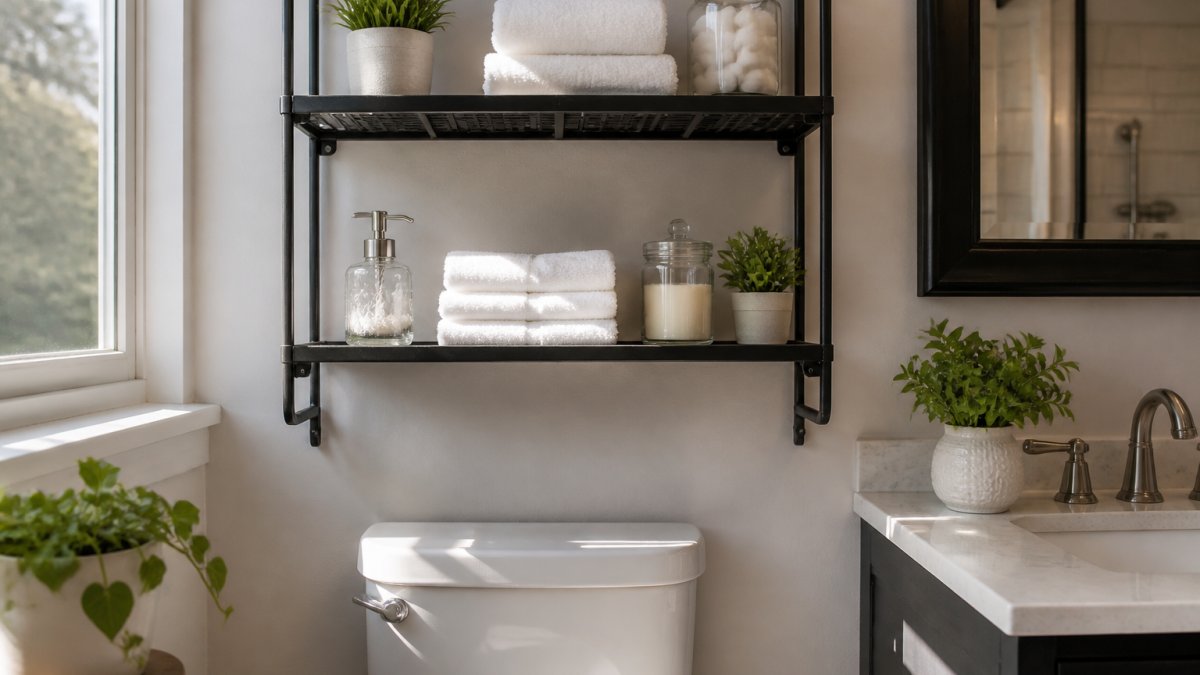
For most bathrooms, metal is the practical winner. It balances durability, ease of maintenance, and reasonable cost.
DIY Bathroom Shelf Above Toilet: Installation and Safety
Installing over-the-toilet storage yourself is manageable, but the difference between a safe unit and a hazard comes down to anchoring, load limits, and reach height. Work through these decisions before you drill a single hole.
Choose the mounting type first. There are four common designs, and each has a different installation and renter profile:
- Freestanding units rest on the floor and lean or stand against the wall. They require no drilling, which makes them the default choice for renters, but they are the least stable under load and should be placed on a level floor and kept away from door swings.
- Wall-mounted units screw into studs or anchors and are the most stable option. They free up floor space and are the best choice for heavy loads, but they require drilling and patching at move-out.
- Tension-pole units wedge between floor and ceiling. They install without tools and suit renters, but they depend on a solid ceiling and a secure floor, and they can loosen over time in humid rooms.
- No-drill adhesive or over-the-tank units hang from the tank or stick to tile. They are the easiest to install and the least capable of holding weight; treat them as light-duty storage only.
Anchor for the load, not the unit. Locate wall studs with a stud finder and mark their centers. Fasten into studs wherever possible; where studs don't align with the bracket, use heavy-duty toggle bolts or anchors rated for the load.
Respect the load limit and distribute weight. Check the manufacturer's weight rating and stay under it. A typical wall-mounted over-the-toilet unit safely holds roughly 50 to 150 pounds total depending on design and materials, while freestanding and tension units generally hold less.
Plan for reach height and accessibility. The most-used items should sit between roughly shoulder and eye level, heavy items below waist height, and rarely used items on the top shelf.
Renter-friendly checklist. If you rent, choose freestanding or tension designs, or ask your landlord before drilling. Use removable adhesive hooks only for lightweight items, patch and paint anchor holes at move-out, and document the installation with photos in case your lease requires it.
Finally, keep moisture and maintenance in mind. Run the exhaust fan during and after showers, and wipe down the unit monthly to prevent dust and soap film from building up. A correctly anchored, properly loaded unit will stay stable for years; a rushed installation is the most common reason over-the-toilet storage fails.
Common Mistakes and How to Avoid Them
Most installation and organization problems stem from a handful of predictable mistakes. Knowing what to avoid saves time and frustration.
The biggest mistake is not measuring before buying. Measure your space, then measure again: check ceiling height, toilet width, and available depth, write these down, and bring them when shopping.
Overstuffing shelves is the second common error. Heavy towels and bottles compress over time, straining the shelf structure. Distribute weight evenly and don't exceed capacity; if a shelf feels full, it probably is.
Poor installation causes safety issues and wasted money. Don't skip the stud finder or use inadequate anchors. A unit that falls is dangerous and destroys whatever's stored inside.
Ignoring moisture is a long-term problem. Metal handles humidity well, but wood and particle board deteriorate.
Forgetting accessibility makes the storage less useful. Store frequently used items at eye level, heavy items lower, and rarely used items higher, organized by category so you find what you need quickly.
Finally, many people don't account for cleaning. Open shelves collect dust and enclosed cabinets trap moisture if not ventilated, so plan for maintenance before you install, not after.
Over-the-toilet storage transforms small bathrooms by reclaiming unused vertical space. Measuring accurately, choosing the right material, and installing safely are the keys to success.
Frequently Asked Questions
How do I measure for over-the-toilet storage?
Measure three distances: the width of your toilet tank (typically 16-20 inches), the height from the tank top to your ceiling, and the depth from the wall to the back of the toilet. Measure at least twice to ensure accuracy. Account for clearance, most codes recommend 6-12 inches of space above the tank for safe operation. Write down all measurements in inches before shopping, as this prevents buying units that won't fit or create safety hazards.
What is the best material for over-the-toilet storage?
Metal and treated wood are the most durable materials for bathroom shelves. Metal resists moisture and mildew better than untreated wood, making it ideal for humid environments. The LumBrook Bathroom Wall-mounted Storage Rack ($121.93) uses high-quality iron with a gray finish, offering both durability and a modern aesthetic. Avoid particleboard or untreated plywood in bathrooms, as they absorb moisture and deteriorate quickly. Stainless steel and powder-coated metal are especially resistant to rust and water damage.
Are shelves or a cabinet better above a toilet?
Shelves work better for renters and frequent reorganizers because they're easier to install and remove. Cabinets offer enclosed storage that hides clutter and protects items from moisture and dust, making them ideal if you store medications, cleaning supplies, or decorative items. Choose shelves if you need flexibility and quick access; choose a cabinet if you want a finished look and protection from humidity. Consider your bathroom's ventilation, poorly ventilated bathrooms benefit more from enclosed storage.
How do I keep over-the-toilet storage stable and safe?
Install shelving or cabinets directly into wall studs using appropriate anchors rated for your storage unit's weight when fully loaded. Never rely on adhesive alone. Check weight limits before filling shelves, most over-the-toilet units safely hold 50-100 pounds per shelf. Ensure the toilet tank lid closes freely without hitting the storage unit. Use a level during installation to prevent items from sliding. If renting, use damage-free adhesive strips rated for heavy loads, but verify with your landlord first.


