


Table of Contents
- What Makes High Quality Home Goods Worth Your Investment
- How to Tell If Furniture Is Well Made
- Best Materials for Home Goods and What to Look For
- Where to Buy Home Decor Online
- Home Decor Shopping Tips for Quality and Value
- A Quality Assessment Checklist for High Quality Home Goods
- Frequently Asked Questions
Last Updated: October 11, 2026
What Makes High Quality Home Goods Worth Your Investment
High quality home goods are designed to last, perform reliably, and improve with age, a difference rooted in materials, construction methods, and attention to detail.
Quality purchases deliver durability, functionality, and better aesthetics: a well-made throw blanket feels different, a solid wood table doesn't wobble, and hardware resists tarnishing and breakage.
Real value emerges when you examine construction, materials, and longevity, factors that separate items worth keeping from those destined for the donation pile.
How to Tell If Furniture Is Well Made
A well-made furniture item resists wobbling, supports weight evenly, and maintains its structure under normal use.
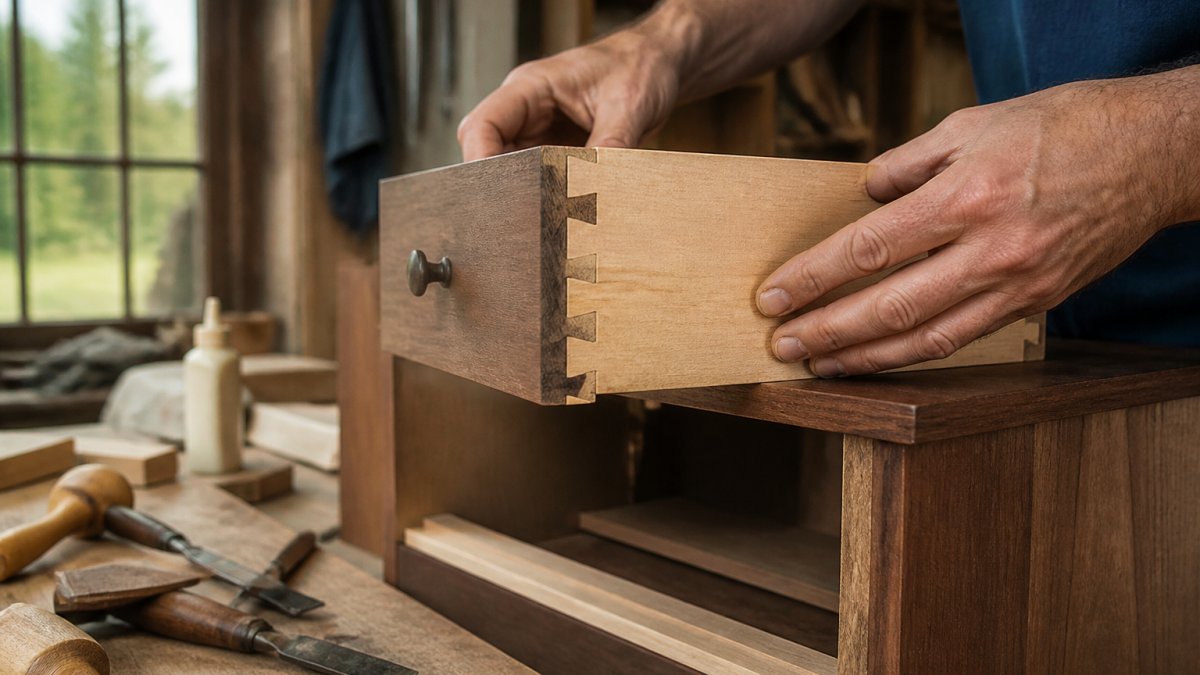
Check Construction and Joinery
Look for solid joinery methods, dovetail joints, mortise-and-tenon joints, dowel construction, rather than nails or staples, as these distribute stress and hold up through years of use.
Run your hand along seams and joints, gaps indicate poor assembly, while tight, flush joints suggest quality craftsmanship. For upholstered furniture, request photos showing hardwood frames, not particle board or plywood.
Examine Hardware and Fasteners
Hardware quality determines whether drawers glide smoothly or stick after a year. Heavy-duty slides, hinges, and handles should feel solid; cheap hardware feels loose, rattles, or requires excessive force.
Bolts and screws should be visible and properly tightened. Quality pieces use hardware proportional to the furniture's size and weight; undersized hardware will eventually break.
Assess Finish Quality
A quality finish feels smooth and consistent. Look under different lighting for streaks, drips, or uneven color, quality finishes are applied in multiple thin coats, sanded between layers, and hand-rubbed for depth.
Check edges and corners, where rough edges or thin finish indicate shortcuts. Quality finishes protect the wood while enhancing its natural character.
Best Materials for Home Goods and What to Look For
Material choice directly impacts longevity, maintenance needs, and how a piece will age.
Natural and Sustainable Options
Solid wood, natural fibers, and untreated materials age gracefully. Hardwoods like oak, walnut, and maple are denser than softwoods and develop character over time.
Beeswax-treated products, like our Reusable Beeswax Food Wrap, represent sustainable alternatives to disposables. Washable and reusable for months, they eliminate plastic waste.

Look for certifications like FSC for wood products or OEKO-TEX for textiles (OEKO-TEX® STANDARD 100). Items made from sustainable materials often cost more upfront but represent genuine value when they last longer.
Durability Standards by Product Type
A kitchen item like our Multifunctional Draining Basket and Bowl for Kitchen must withstand daily washing and moisture.

For storage solutions like our Bathroom Wall-mounted Storage Rack, durability means holding weight securely without sagging or rust.
Our Beeswax Bags for Bread are made from high-quality cotton with beeswax coating that allows bread to breathe while preventing drying. Hand-washing and air-drying keeps them functional for months of repeated use.

Where to Buy Home Decor Online
Finding high quality home goods online requires evaluating seller credibility, product photography, specifications, and review patterns to assess quality before purchase.
Verify Seller Credibility and Authenticity
Verify whether the retailer is the manufacturer, authorized distributor, or reseller.
Look for physical business information: street address, phone number, and clear return/refund policy. If contact information is missing or a business operates only through a marketplace, proceed cautiously. Check the Better Business Bureau (BBB) rating and complaint history.
For high-value items, verify that product photos are original to the retailer, not stock images reused across sellers. Original photos show multiple angles, detail shots of construction and hardware, and may feature the product in a styled setting.
Assess Product Specifications and Photography
Quality listings include exact dimensions, weight, material composition, and weight capacity. If specifics are missing, request clarification; responsive sellers provide details within 24 hours.
Examine product photos for consistency and detail. High-quality listings show:
- Multiple angles (front, side, back, detail of joints or seams)
- Close-ups of hardware, stitching, and finishes under clear lighting
- Scale reference (a person, common object, or ruler) so you can judge actual size
- Photos of the product in use or styled in a room, not just on a white background
- Clear labeling of what's included (e.g., "includes 2 throw pillows; curtain rod sold separately")
If a listing has only one or two photos, or if photos are blurry or poorly lit, the retailer has not invested in presentation, often correlating with lower quality control.
Evaluate Customer Reviews for Durability Signals
Filter for verified purchasers and focus on users who have owned the product for at least 3-6 months. A five-star review posted one week after purchase reflects first impressions, not durability.
Look for specific details and patterns. If multiple reviews mention the same issue, loose hardware, fading color, wobbly legs, that's a red flag.
Be skeptical of reviews posted within days of the product's listing date, which may be from the seller rather than genuine customers.
Compare Shipping, Return Costs, and Total Price
The listed price is not the final cost. Factor in shipping, return shipping, and restocking fees. Calculate the true total before comparing across retailers.
Check whether the retailer pays for return shipping. Some charge restocking fees (typically 10-20%) on returns. A retailer offering free returns with prepaid labels is more customer-friendly.
For items shipped from overseas, check estimated delivery time and whether customs duties or import fees apply at checkout.
Verify Certifications and Standards
For textiles, look for OEKO-TEX certification. For wood furniture, look for FSC (Forest Stewardship Council) certification. For cookware and food-contact items, verify that materials meet FDA standards (the FDA).
Check whether the product meets relevant safety standards. If a listing does not mention compliance, contact the seller directly. Legitimate manufacturers know their certifications and will provide documentation.
For items with electrical components, verify that the product is UL-listed or ETL-certified for electrical safety.
Home Decor Shopping Tips for Quality and Value
A $30 item lasting one year costs more per year than a $100 item lasting five years. Compare items across multiple dimensions: initial cost, expected lifespan, maintenance, repair options, and resale value.
Calculate Price-Per-Use and Annual Cost
Divide the total cost by the expected number of uses or years of ownership to calculate price-per-use.
Example: A $40 blanket used daily for three years = $0.04 per use, while a $15 blanket lasting one year also = $0.04 per use.
For items used occasionally, adjust the calculation. The more frequently you use something, the more important durability becomes.
Annual cost is another useful metric for items with maintenance needs. A $200 rug requiring professional cleaning twice per year ($100 per cleaning) costs $400 annually.
Factor in Maintenance, Repair, and Replacement Costs
Natural wood furniture may need occasional refinishing. A solid wood table might require a new finish every 5-10 years, costing $200-500.
Natural fabrics like linen and wool often require dry cleaning.
Leather requires conditioning and develops patina. Quality leather can be repaired if scratched or torn, often for $50-200.
Cookware and kitchen items vary in repairability. Stainless steel cookware lasts decades and is easily repaired.
Before purchasing, ask the retailer: Can this item be repaired if damaged? Are replacement parts available? What is the expected lifespan?
Assess Warranty Coverage and Manufacturer Confidence
Warranties signal how long the maker expects a product to last. A five-year warranty suggests confidence in long-term performance.
Read warranty details carefully. Some cover defects but not normal wear and tear; others cover accidental damage.
Check whether the warranty is transferable. A transferable warranty increases resale value. Non-transferable warranties are less valuable.
For high-value items, ask whether the manufacturer offers extended warranty options. Whether this is worth buying depends on the item's expected lifespan and repair costs.
Compare Across Multiple Retailers and Account for Hidden Costs
The same item often costs different amounts at different retailers. Before deciding, check at least three sources: the manufacturer's website, a specialty retailer, and a general marketplace. Prices vary, and so do return policies and shipping costs.
Create a comparison spreadsheet for items you're seriously considering:
| Retailer | Product Price | Shipping | Return Shipping | Total Cost | Return Window | Warranty |
|---|---|---|---|---|---|---|
| Retailer A | $200 | Free | Free | $200 | 60 days | 5 years |
| Retailer B | $180 | $25 | Customer pays | $205+ | 30 days | 1 year |
| Retailer C | $210 | $15 | Free | $225 | 90 days | Lifetime |
The cheapest product price is not the best value when you account for return shipping costs and return window length. Compare total cost, return policies, and warranty coverage.
Prioritize Durability Over Trend-Driven Purchases
Before buying something primarily because it's on-trend, ask yourself: Will I still like this in two years? If the answer is no, the item is trend-driven, not an investment.
Trend-driven items should be inexpensive because their useful life is shorter. A $15 decorative pillow in this season's trendy color is reasonable; a $150 sofa in the same color is risky.
Classic, neutral items (solid wood furniture, natural fabrics, timeless designs) remain useful and attractive for longer. They often cost more upfront but deliver better value over time.
A Quality Assessment Checklist for High Quality Home Goods
Before purchasing any home item, run through this checklist. It takes two minutes and prevents expensive mistakes.
- Materials: Is the item made from quality materials appropriate for its use? (solid wood vs. particle board, natural fabrics vs. synthetics, durable hardware)
- Construction: Are joints tight and flush? Does hardware feel solid? Is the finish smooth and even?
- Product Details: Does the listing provide specific materials, dimensions, weight capacity, and care instructions?
- Reviews: Do long-term users report durability? Are specific issues mentioned repeatedly?
- Price Context: Does the price reflect the quality and expected lifespan? Have you calculated annual cost?
- Return Policy: Can you return the item if it doesn't meet expectations? Who pays for return shipping?
- Warranty: Does the maker offer a warranty? How long does it cover?
- Seller Credibility: Does the retailer provide detailed information and respond to questions?
Frequently Asked Questions
What's the best way to evaluate high quality home goods before buying online?
Start by reading detailed product descriptions, dimensions, and materials. Check customer reviews for mentions of durability and longevity. Look for product photos showing construction details, seams, and finishes. Verify the retailer's return policy so you can send items back if they don't meet expectations. Request care instructions to understand maintenance requirements. Cross-reference materials against durability standards for that product type to confirm quality expectations.
How can I tell if furniture is well made when I can't see it in person?
Examine product photos for tight joinery, smooth finishes, and sturdy hardware. Check the materials list, solid wood, high-grade metals, and quality fabrics signal better construction. Read customer reviews specifically mentioning durability and how the piece holds up over time. Ask the retailer about construction methods and whether joints are glued, doweled, or screwed. Look for warranties, which manufacturers typically offer only on well-made pieces. Reputable sellers provide detailed specs on frame construction, weight capacity, and assembly requirements.
What materials should I look for in quality home goods?
Solid wood, hardwoods like oak and walnut, and sustainably sourced materials indicate durability. For textiles, look for natural fibers like cotton, linen, and wool. Metal hardware should be stainless steel or powder-coated iron to resist corrosion. Avoid particleboard and veneers for furniture that needs to last. For kitchen items, food-safe materials like natural beeswax wraps offer both quality and sustainability. Check material certifications and care instructions, quality goods typically include detailed maintenance guidance to extend lifespan.
How do I know if an online home decor retailer is trustworthy?
Verify the retailer's return and warranty policies before purchasing. Look for customer reviews on independent sites and check how the company handles damaged shipments or defective items. Trustworthy retailers display clear contact information, transparent shipping costs, and detailed product listings with honest photos and measurements. Check whether they verify sellers if using a marketplace model. Curated retailers that carefully select their product lines typically maintain higher quality standards than large, overwhelming sites.
Finding high quality home goods takes more effort than impulse buying, but the payoff is real. Items that last years rather than months save money, reduce waste, and bring genuine satisfaction. LumBrook curates products specifically to meet these standards, we select items across home goods, kitchen essentials, and storage solutions that balance quality with accessibility. Start with this framework, use it consistently, and you'll build a home filled with pieces you'll actually keep.


