


Quick Summary
To choose a memory foam neck pillow, start with your main sleep position and the type of neck discomfort you have. Side sleepers need higher loft to fill the shoulder gap, while back sleepers usually need lower to medium loft with a gentle cervical curve.
- Pick loft by measuring from the top of your shoulder to the side of your neck while lying on your side.
- Side sleepers need more loft; back sleepers usually need less, with a contoured shape supporting the neck.
- Solid memory foam keeps its contour consistently, while shredded fill can be adjusted but may shift or clump.
- Check the foam density figure, since higher density generally holds its shape longer.
- Judge a new pillow over a full week of nightly use, not on the first night.
Table of Contents
- Start With Your Sleep Position and Neck Symptoms
- Pillow Loft Height Guide: Matching Height to Your Shoulders
- Shredded vs Solid Memory Foam Pillows: Which Suits Your Neck
- Firmness, Density and Shape: What to Check on the Label
- Best Memory Foam Pillow for Side Sleepers: Features That Matter
- The At-Home Fit Test and Troubleshooting the Adjustment Period
- Your Next Step: Choosing the LumBrook Memory Foam Neck Pillow
- Frequently Asked Questions
Start With Your Sleep Position and Neck Symptoms
Last Updated: November 12, 2026
Most people shopping for a memory foam neck pillow start with the price tag, but the right pillow depends far more on how you sleep and what your neck is doing at night.
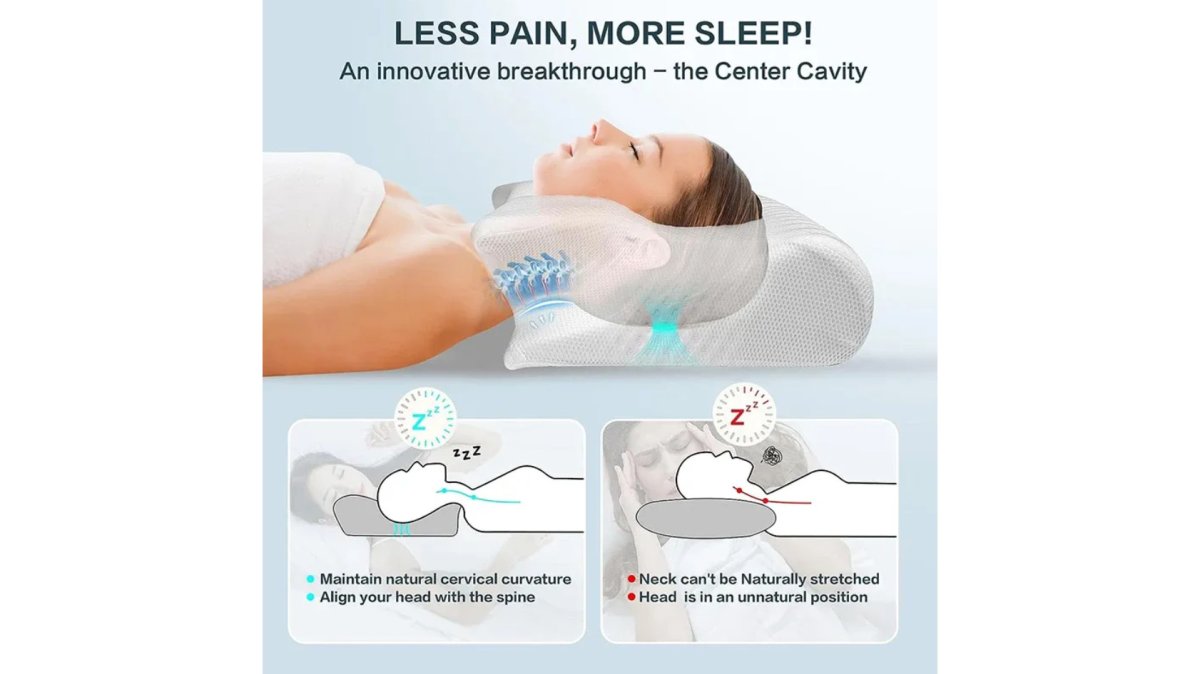
A memory foam neck pillow is a contoured pillow, usually shaped like a cervical roll, designed to cradle the neck's natural curve while keeping the head at a steady height.
Side sleepers and back sleepers
Side sleepers need more loft, the height of the pillow from the mattress to the top of its surface, because the gap between the head and the mattress is wider. Without enough height, the head tips downward and the neck bends sideways for hours.
Look for a contoured shape with a raised support under the neck. This shape helps keep the spine in line in both positions.
Combination sleepers: how to decide
Many people shift positions several times a night, and a single-height pillow rarely fits all of them. Choose the position you spend the most time in, then check whether the pillow still feels acceptable when you roll over.
Watch out: if your neck symptoms include numbness, weakness, or pain that spreads down an arm, a pillow is not the fix. Those signs call for a clinician, not a shopping decision.
Pillow Loft Height Guide: Matching Height to Your Shoulders
Loft matters more than most product pages admit, and the right height depends largely on shoulder width. Measure from the top of your shoulder to the side of your neck while lying on your side, and compare that gap with the pillow's height in the specs. A pillow that fills the gap keeps the neck level; one that leaves the head tilted or pushes it too high forces the muscles to work all night.
Use this quick guide when comparing listings:
| Sleep position | Typical loft need | What to look for |
|---|---|---|
| Side sleeper | Higher | Raised side that fills the shoulder gap |
| Back sleeper | Lower to medium | Gentle cervical curve, no steep rise |
| Combination sleeper | Adjustable | Dual-height or removable fill |
Shredded vs Solid Memory Foam Pillows: Which Suits Your Neck
The construction of the foam changes how the pillow feels, how adjustable it is, and how it ages. Both types can support the neck; they fail in different ways, so the right choice depends on whether you value consistency or tunability.
Solid memory foam: one piece, consistent support
Solid foam is molded or cut as a single piece, often with a contoured cervical roll and a recessed center for the head.
The trade-off is that you cannot change height or firmness. If the loft is wrong, your only options are flipping a dual-height design, adding a thin liner, or replacing the pillow. Solid foam also feels firmer at first and can run warm.
Shredded memory foam: adjustable fill, variable feel
Shredded foam is small pieces of memory foam inside a cover. Fill-based pillows of this kind can be adjusted by adding or removing fill, which can help if you are still dialing in your ideal height or switch positions during the night.
The trade-off is variability. Shredded fill can shift and clump, so the feel can change night to night. Check the cover's construction and confirm the seller's replacement and fill policies before you buy.
How the two age, and when to replace
Both types degrade, but the signs differ. Solid foam softens and loses loft gradually; you may notice the contour no longer fills the neck curve or that you wake stiffer than a year ago. Shredded foam compresses and loses volume, so the pillow gets lower and needs more fill or fluffing. A practical replacement signal for either type is a return of the symptoms the pillow originally solved, morning stiffness, shoulder pressure, or the sense that you are sleeping 'downhill.' The symptom signal matters more than the calendar when deciding whether to replace a memory foam pillow.
A simple decision rule
- Choose solid if you have confirmed your loft and firmness, want the contour to stay put, and prefer a consistent feel night to night.
- Choose shredded if you are still testing heights, switch sleep positions, want to fine-tune cervical support, or run hot.
- Choose a dual-height solid pillow if you want consistency but need two loft options for back and side sleeping.
Whichever you pick, match the construction to your fitting process: a shredded pillow rewards step-by-step adjustment, while a solid pillow rewards getting the loft right before you buy.
U.S. Consumer Product Safety Commission guidance on mattress and bedding products
Firmness, Density and Shape: What to Check on the Label
Firmness is subjective, but density is measurable, and it tells you how long the foam will keep its shape. Look for the foam density figure in the product details, usually given in pounds per cubic foot.
Check the shape as well. For a deeper look at judging product quality before you order, read our guide on How to Find High Quality Home Goods: A 2026 Guide. Vetting claims on listings is covered in How to Vet Online Product Quality Before You Buy?.
U.S. Consumer Product Safety Commission guidance on mattress and bedding products is a useful place to check general safety and labeling expectations for bedding.
Best Memory Foam Pillow for Side Sleepers: Features That Matter
Side sleepers have the most specific needs, so features matter more than brand names.
The LumBrook Memory Foam Neck Pillow is described as a 2-in-1 ergonomic cervical pillow with contoured support for the neck and shoulders, an orthopedic shape, and breathable, high-density memory foam.
Judge a pillow by how you wake across a full week of nightly use, not by the first night alone.
The At-Home Fit Test and Troubleshooting the Adjustment Period
Most buying guides stop at the product page. The real decision happens in the first two weeks after the pillow arrives, when you can test alignment, adjust loft, and separate normal break-in from a genuine mismatch. Treat the pillow as a fitting process, not a one-night verdict.
Step 1: Set a baseline before you lie down
Unpack the pillow and let it fully expand at room temperature for the time the manufacturer specifies, often 24 to 48 hours for compressed memory foam. A pillow that is still cold and compressed will feel firmer and lower than its true loft, skewing every test that follows. Put it in its cover, place it on your usual mattress, and keep your normal bedtime routine.
Step 2: Check alignment in each position
Lie down in your dominant sleep position and have someone photograph you from the side at pillow height, or use a phone propped at mattress level.
- Back sleeping: The chin should be roughly parallel to the mattress, not tucked toward the chest and not tipped up. If the chin drops, the pillow is too high at the head; if the chin lifts and the throat feels exposed, it is too low. The cervical contour should fill the curve under the neck without pushing the head forward.
- Side sleeping: The nose should point roughly straight ahead and the head should not tilt down toward the mattress or up toward the ceiling. The pillow should fill the gap between the side of the neck and the mattress so the shoulder is not compressed. If your top shoulder rolls forward, the pillow is likely too low; if your head is pushed uphill, it is too high.
- Stomach sleeping: A contoured cervical pillow is usually a poor match here because it lifts the head and extends the neck. If you spend meaningful time on your stomach, test a very low loft or skip the contour entirely.
Repeat the check after 20 to 30 minutes, because memory foam softens as it warms to body temperature. A pillow that looks right in the first minute can sink too low by the time you fall asleep.
Step 3: Adjust one variable at a time
If the pillow is shredded or has removable fill, change one thing per night: remove a handful of fill to lower loft, add fill to raise it, or shift fill from the center to the neck roll. Solid foam cannot be adjusted, so your levers are position (flip a dual-height pillow to the lower or higher side), a pillow liner to add height, or a different pillow.
Step 4: Troubleshoot the common failure modes
- Pressure at the jaw or ear: Usually too much loft or too firm a foam. Try the lower side of a dual-height pillow or remove fill.
- Neck stiffness that builds through the night: Often too little support under the neck. Check that the contour, not the flat center, is under the cervical curve.
- Heat and night sweats: Memory foam traps heat. A breathable cover, a cooler room, or a gel-infused or open-cell foam can help; a pillow that runs hot every night is a legitimate reason to switch.
Step 5: Give it a fair trial, then decide
A common pattern is mild stiffness for the first three to seven nights as your neck muscles adapt to a new height. Judge the pillow on how you wake across a full week, not on night one. Keep a simple seven-night log: sleep position, wake-ups, and whether your neck felt stiff, neutral, or supported. If the log shows no improvement by the end of two weeks, or if symptoms worsen, the pillow is not the right fit, return it within the seller's trial window rather than forcing it.
Watch out: numbness, weakness, or pain radiating down an arm is not a pillow-fitting problem. Those symptoms call for a qualified health professional, and no amount of loft adjustment substitutes for that evaluation.
National Institute of Neurological Disorders and Stroke overview of neck pain
Your Next Step: Choosing the LumBrook Memory Foam Neck Pillow
If your sleep position and shoulder measurement point toward a contoured cervical pillow, the LumBrook Memory Foam Neck Pillow is worth a close look. It is priced at $409.64, and its listed features include breathable, high-density memory foam, contoured support, and an orthopedic shape. Browse the Memory Foam Neck Pillow to compare its specifications against the criteria above.
Frequently Asked Questions
What should I look for when buying a memory foam pillow for neck support?
Start with the sleep position you use most, then check loft, firmness and contour. Side sleepers usually need a higher loft so the head sits level with the spine, while back sleepers often do best with a lower, contoured profile. Look for a cervical or contoured shape that cradles the neck, a firmness that holds the head without bottoming out, and a cover you can remove or wash. Compare the stated height in inches against your shoulder width before buying, and avoid pillows that do not list dimensions or foam density.
Are shredded memory foam pillows better than solid ones for neck alignment?
Solid foam offers a steadier, more uniform surface and can feel firmer under the neck. Neither is universally better. Choose shredded if you want adjustability and solid if you want consistent contour. Either way, the loft and support it provides matter more than the fill type alone.
How do I know if a memory foam pillow is the right firmness for me?
Lie in your usual position and check whether your head sits level with your spine, without tilting up or sinking down. A pillow that is too soft lets the head drop into the foam, while one that is too firm keeps the head raised and strains the neck. Medium-firm suits many people, but your body weight and sleep position change the result. Give a new pillow one to two weeks before judging it, since memory foam softens slightly as it warms.
Who should I see if my neck pain continues despite a new pillow?
A pillow can help with general neck stiffness from poor support, but persistent pain, numbness, tingling in the arms, or pain after an injury needs evaluation by a doctor or physical therapist. Do not treat those symptoms as a pillow problem alone. A clinician can check whether the cause is positional, muscular, or something that needs treatment, and can advise whether a cervical pillow is appropriate for your condition.


