


Quick Summary
A facial massager can help skin look brighter and less puffy for a short time, mainly through massage, cold, or light and current effects. Lasting firming or lifting is not well supported for at-home devices. Choose one based on whether you want cooling, massage, or microcurrent.
- Cooling tools, used for 5 to 10 minutes in the morning, are the most reliable option for temporary depuffing.
- Expect short-term effects within minutes; evidence for lasting firmness from at-home devices is thin and mixed.
- Apply a slip layer such as serum or oil and use light pressure, because dragging a tool over dry skin causes tugging.
- Microcurrent devices need a conductive gel or water-based serum, since dry skin blocks the current.
- Stop using a massager if you notice persistent redness, stinging, or breakouts in the treated area.
Table of Contents
- How a Facial Massager Supports Glowing Skin
- What Results to Realistically Expect From Facial Massagers
- Comparing LumBrook's Facial Massagers and Tools
- Best Facial Massager for Depuffing
- Vibrating and Microcurrent Devices: How They Differ
- How to Use a Facial Massager in Your Routine
- Safety, Hygiene, and Who Should Skip Facial Massagers
- Choosing Your First Tool and Starting Your Routine
- Frequently Asked Questions
How a Facial Massager Supports Glowing Skin
Facial massagers are a popular way to add a relaxing step to a skincare routine. Their appeal comes from a simple idea: gentle movement across the face may help skin look brighter and feel more refreshed. LumBrook's curated collection includes several tools built around that idea.
The main mechanisms people point to are massage, temperature, and light or current. Manual massage can help product spread evenly. Cooling tools may make skin look less puffy for a short time. Some electric devices add vibration or microcurrent, which is marketed to firm the skin. Each mechanism works differently, so it helps to know which one a given tool uses.
A common mistake is expecting one device to do everything. A massager works best as a supporting step, not a replacement for sunscreen, cleansing, or a moisturizer that suits your skin.
What Results to Realistically Expect From Facial Massagers
Most roundups blur together what a tool can plausibly do tonight and what it might do over months. Separating the two is the single most useful thing you can do before spending money.
Well-supported, short-term effects. Gentle massage and cooling produce changes you can see within minutes and that typically fade within a few hours. These include:
- Temporary depuffing. Cold constricts blood vessels and manual movement helps move fluid that collects under the eyes and along the jaw. A 5- to 10-minute morning session with a chilled tool is the most reliable use case.
- A temporary glow. Massage increases local blood flow, which can make skin look slightly flushed and brighter for a while. This is a circulation effect, not a change to the skin itself.
- Better product spread and a more pleasant routine. A tool helps serum or moisturizer distribute evenly and makes the step feel like a ritual, which supports consistency.
Claims that need much more caution. Marketing for microcurrent and vibration devices often implies lasting lifting, collagen remodeling, or wrinkle reduction. The honest position is that evidence for durable structural change from at-home facial massagers is thin and mixed. Professional microcurrent treatments are typically studied in clinic settings with trained operators and higher output; a handheld consumer device is not the same intervention. Treat "firms," "lifts," and "boosts collagen" as marketing language until you see independent evidence for that specific device.
A realistic timeline. If you use a tool consistently, here is one way to judge it:
- Day 1: Look for temporary depuffing and a fresher appearance. If you do not see this, the tool may simply not suit your face or your puffiness pattern.
- Weeks 1-4: Judge comfort, ease of use, and whether the routine sticks. This is the period where most people quit, so usability matters more than specs.
- Beyond 4 weeks: Any change in firmness or fine lines is hard to attribute to the tool alone, because sleep, hydration, sun exposure, and other products move the needle too. Change one variable at a time if you want to learn anything.
How to track outcomes honestly. Pick one or two things to watch, under-eye puffiness in the morning, how your jaw feels, or how your skin looks 10 minutes after a session, and note them for two weeks. Avoid judging by feel alone after a bad night's sleep, and do not stack a new tool with a new serum at the same time, or you will not know which one did what.
Comparing LumBrook's Facial Massagers and Tools
LumBrook carries several tools that fit different routines. Here is how they compare at a glance:
| Product | Starting Price | Type | Best For |
|---|---|---|---|
| Beauty Facial Massager, 7 Color Wavy Microcurrent Device | $69.74 | Microcurrent | Firming face and neck |
| Advanced Electronic Gua Sha Beauty Massager | $96.21 | Electronic gua sha | Massage with three power levels |
| Collapsible Silicone Ice Basin | $40.22 | Cooling basin | Ice facials and cool-down rituals |
| Double-Sided Silicone Facial Cleansing Brush | $29.52 | Cleansing brush | Cleansing and gentle exfoliation |
The Advanced Electronic Gua Sha Beauty Massager is compact, measuring 107mm x 26.5mm x 26.5mm, and charges in about 30 minutes. You can view its full specifications and current price on its product page. It is built from ABS and stainless steel and runs at a warm 45 degrees Celsius. The Beauty Facial Massager is described as a microcurrent device. The silicone ice basin suits people who prefer a cooling, low-tech ritual.

Best Facial Massager for Depuffing
If puffiness is your main concern, cooling tools are the first place to look. The Collapsible Silicone Ice Basin, at $40.22, measures 27 × 26 × 3.5 cm and is collapsible for easy storage. It suits morning refresh routines and post-workout cool-downs.
For a device that combines massage with a microcurrent feature, the Beauty Facial Massager at $69.74 is one option. The right pick depends on whether you want cold or movement.

Vibrating and Microcurrent Devices: How They Differ
Vibrating devices use rapid motion to move the skin. Microcurrent devices send a low electrical current through the skin. The two differ in mechanism and feel.
Beauty Facial Massager, 7 Color Wavy Acne Beauty Microcurrent Facial Device →
The Advanced Electronic Gua Sha Beauty Massager offers three adjustable power levels, which lets you tailor intensity. Start at the lowest setting and increase only if your skin tolerates it comfortably.
How to Use a Facial Massager in Your Routine
Generic advice, "move upward and outward", does not tell you how to use a cooling tool versus a microcurrent wand versus a manual gua sha. The order, duration, pressure, and compatible products differ by tool type. Here is a practical breakdown.
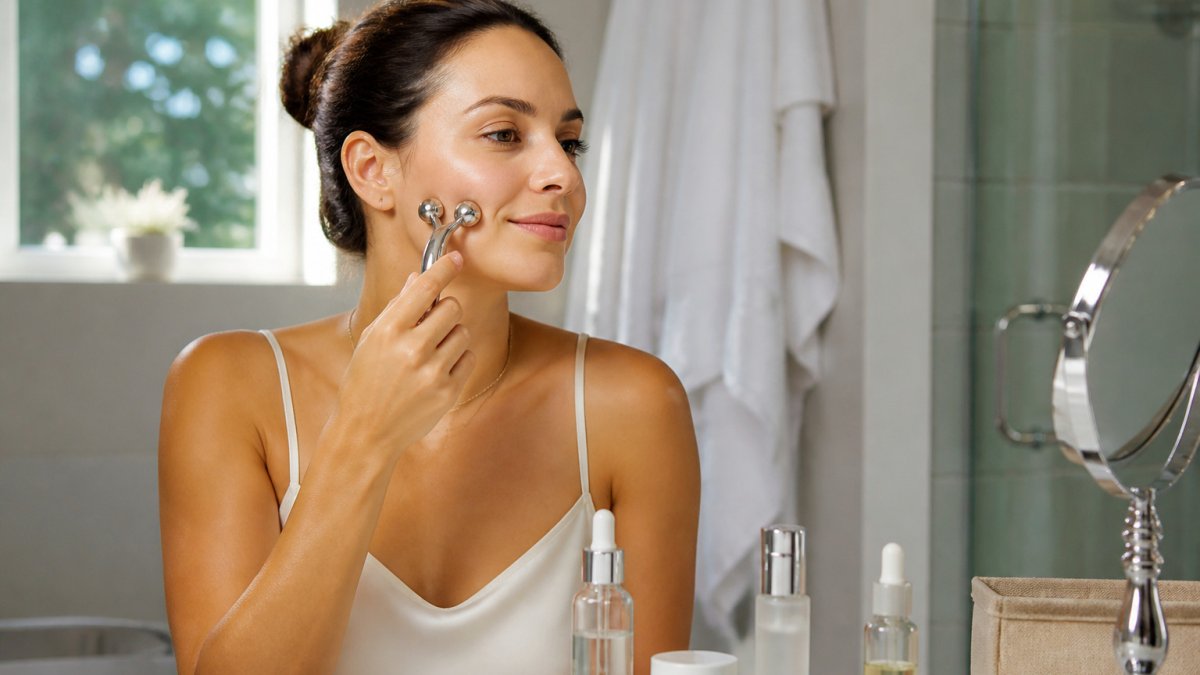
The universal rules first. Whatever the tool:
- Start clean. Cleanse and pat dry. The Double-Sided Soft Silicone Facial Cleansing Brush, at $29.52, can be used as a cleansing step before massage.
- Always use a slip layer. Never drag a tool across dry skin. Use a water-based serum, a facial oil, or a moisturizer, enough that the tool glides without tugging.
- Light pressure only. The face has thin skin and little fat over the cheekbones and jaw. If the skin blanches white under the tool or you feel a pinch, you are pressing too hard.
- Work upward and outward, then down the neck. Move from the center of the face toward the ears, and from the jaw down the sides of the neck toward the collarbone to encourage fluid movement.
By tool type.
- Cooling tools (ice basin, chilled roller, cold globes). Best in the morning or after a workout. Chill the tool before use, then glide over the under-eyes, cheeks, and jaw. Keep it moving rather than holding cold against one spot. Pair with a light gel or water-based serum; heavy creams feel tacky when cold. The Collapsible Silicone Ice Basin, at $40.22, is a simple option for a cold facial ritual.
- Manual gua sha and rollers. Use after serum or oil with gentle strokes. Clean and dry the tool after each use.
- Vibrating devices. Use on clean skin with a serum, 3-5 minutes, starting on the lowest speed. Vibration is a mechanical massage, so the goal is movement and product spread, not pressure. If your skin tingles or reddens quickly, shorten the session.
- Microcurrent devices. These require a conductive gel or water-based serum, dry skin blocks current and makes the session uncomfortable. Use on clean skin, follow the device's own directional instructions, and start at the lowest setting. The Beauty Facial Massager, 7 Color Wavy Microcurrent Device, at $69.74, and the Advanced Electronic Gua Sha Beauty Massager, at $96.21, are both listed as electronic massagers; begin at a low setting and increase only if your skin stays comfortable.
Order within a routine. Cleanse → treat (serum) → massage → moisturizer → sunscreen in the morning. Do not massage over an active acne treatment, a retinoid that is still stinging, or an exfoliating acid, the combination can irritate skin.
Frequency. Start gently and watch how your skin responds before increasing how often you use a tool.
Hygiene between sessions. Follow the manufacturer's cleaning instructions for any tool, and dry it fully after each use.
Safety, Hygiene, and Who Should Skip Facial Massagers
Clean your tool after each use and let it dry fully. Do not use a massager on broken, irritated, or sunburned skin. People with active acne, rosacea flare-ups, or skin conditions should check with a dermatologist before using electrical or microcurrent tools. Anyone with a pacemaker or other implanted medical device should ask a doctor before using an electrical device.
Watch out: pressing too hard or using a device too often can irritate skin and worsen redness.
Choosing Your First Tool and Starting Your Routine
Start with one tool that matches your main goal. Choose the ice basin for a cold facial ritual, the microcurrent device for a microcurrent massage, the gua sha massager for adjustable massage, or the cleansing brush for cleansing. Track how your skin looks over time and adjust from there. Shop the full LumBrook collection to compare options and find the right starting point for your routine.
Frequently Asked Questions
Which face massager is best for glowing skin?
The best choice depends on the look you want. The Advanced Electronic Gua Sha Beauty Massager ($96.21) offers a warm 45 degrees Celsius setting and three power levels. The Beauty Facial Massager with microcurrent ($69.74) is a lower-priced option among these devices. The Collapsible Silicone Ice Basin ($40.22) is a cooling option for ice facials. Pick based on whether you want heat, microcurrent, or cold, and use it consistently.
Can a facial massager reduce puffiness?
The Collapsible Silicone Ice Basin ($40.22) is designed for ice facials and cool-down routines. Treat a massager as one part of a routine rather than a cure. Use light pressure, work upward and outward, and stop if your skin becomes irritated.
How often should you use a facial massager?
Start with a few minutes and increase only if the skin tolerates it well. The Double-Sided Soft Silicone Facial Cleansing Brush ($29.52) is designed for cleansing the face. Watch for redness, tightness, or breakouts, and reduce frequency if any appear.
Are facial massagers safe for sensitive skin?
Sensitive skin should begin with the lowest power level and a short session, then build slowly. Avoid use on broken skin, active acne, sunburn, or recent procedures. Clean the device after each use, since residue and bacteria can irritate skin. If you have a skin condition or a question about a device-based treatment, speak with a dermatologist before starting.


