


Last Updated: November 2, 2026
Quick Summary
A comfort blanket is a soft, familiar throw people use to relax, unwind, or feel settled on a sofa, bed, or reading chair. The right one depends on where you will use it, how warm you want it, and how much weight you can comfortably handle.
- Test softness by holding the fabric against your cheek for ten seconds.
- Heavier blankets are not automatically warmer; dense, non-breathable fabric can feel hot.
- If you sleep hot, prioritize breathability over maximum warmth.
- Choose a weighted blanket at around 10 percent of body weight, starting lighter if unsure.
- Wash on a gentle cycle in cool water, skip fabric softener, and air dry or tumble on low.
Table of Contents
- What a Comfort Blanket Is and Who Buys One
- How We Evaluated Softness, Warmth and Breathability
- Warmest Blanket Materials Compared
- Weighted Blanket for Adults: Weight, Safety and Who It Suits
- Shedding, Pilling and Durability After Repeated Use
- How to Wash a Blanket Without Ruining the Fabric
- Which LumBrook Blanket Fits Your Home and Budget
- Frequently Asked Questions
What a Comfort Blanket Is and Who Buys One
A comfort blanket is a soft, familiar throw that people reach for to relax, unwind, or feel settled. Many shoppers want one for the sofa, the bed, or a reading chair, and some look for a heavier style that feels grounding.
Buyers tend to fall into a few groups. Some want a simple throw for movie nights. Others want warmth for a cold bedroom or an office that runs cool. Because the use cases differ, the right choice depends on what you need most.
Start with three questions: where will you use it, how warm do you want it, and how much weight can you comfortably handle? Answering those first makes the rest of the decision much easier.
How We Evaluated Softness, Warmth and Breathability
Softness, warmth, and breathability are hard to judge from a product photo. We look at them through practical criteria you can check yourself.
Softness is about the feel of the surface against bare skin. Pile height, fiber type, and how the fabric is finished all change the result. Warmth depends on how well the fabric traps air, so a thicker, denser weave generally insulates better than a thin one. Breathability matters just as much, because a blanket that holds heat too well can make you sweat overnight.
A simple test works well at home. Hold the fabric against your cheek for ten seconds. Pay attention to whether it feels cool, neutral, or warm. Then drape it over your legs for ten minutes and note whether you start to feel stuffy. That gives you a rough read on comfort and temperature regulation before you buy.
Watch out: heavier blankets are not automatically warmer. A dense, non-breathable fabric can feel hot long before a lighter, more open weave does.
Warmest Blanket Materials Compared
Material is the single biggest factor in how a blanket feels and performs. Fleece and sherpa are common choices for warmth at a moderate price, while flannel offers a softer, lighter layer that suits year-round use.
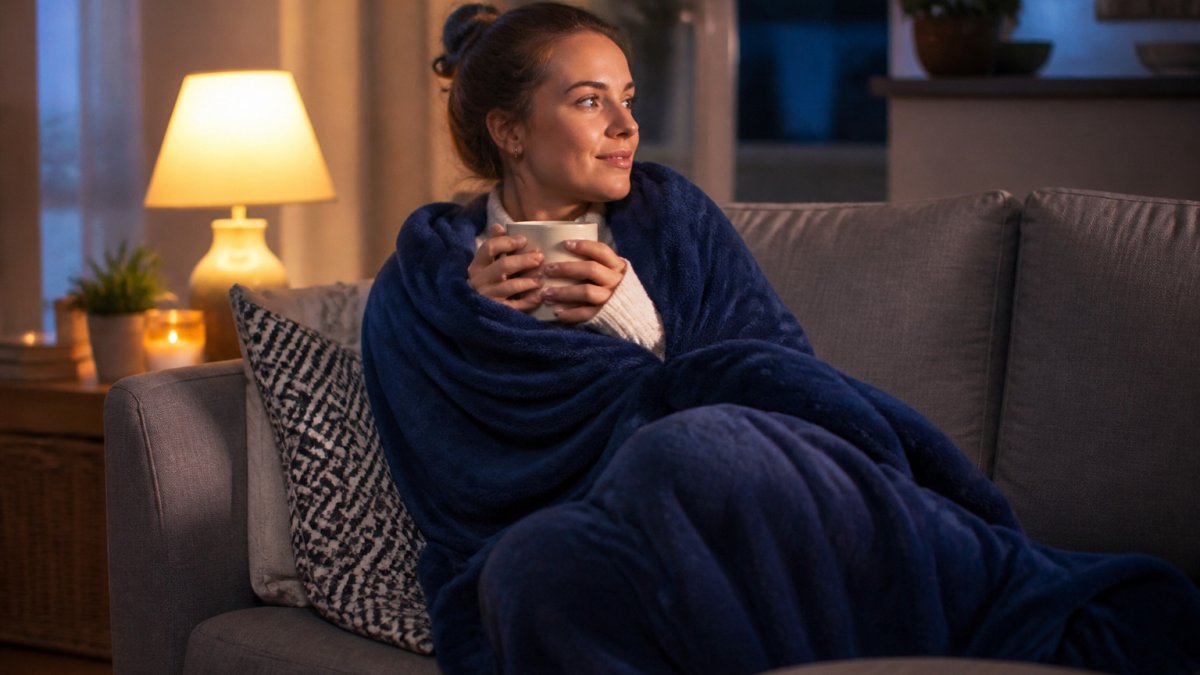
Here is how the main blanket types compare on the criteria that actually change your experience:
| Type | Warmth | Breathability | Weight | Texture | Best For | Watch Out For |
|---|---|---|---|---|---|---|
| Fleece | High | Moderate | Light to mid | Smooth, brushed | Cold rooms, winter sofa use | Can pill with friction |
| Sherpa | High | Moderate | Mid | Plush, nubby | Lounging, layering | Sheds in first washes |
| Faux fur | High | Low to moderate | Mid to heavy | Long pile, airy | Styling, sofa accent | Traps heat, harder to wash |
| Flannel | Moderate | Good | Light | Soft, woven | Year-round bed use | Shrinks if dried hot |
| Weighted | Moderate | Varies by shell | Heavy | Depends on cover | Grounding pressure, bed layer | Not for everyone; see safety notes |
| Heated | Adjustable | Varies by shell | Mid | Depends on shell | Controllable warmth, bed or sofa | Cord and controller care |
A few trade-offs are worth spelling out. Faux fur looks the warmest and feels the most luxurious, but the long pile holds heat and is the least breathable option on this list, so it is a poor choice for a warm bedroom or a sleeper who runs hot. Fleece and sherpa sit in the middle: warm enough for winter, but a dense sherpa can feel stuffy overnight. Flannel is the most breathable of the soft options and the easiest to layer year-round, which is why it shows up as a shell fabric on heated blankets. Weighted blankets are not primarily about warmth; their job is pressure, and the cover fabric decides whether they sleep cool or hot.
Material alone does not settle the question. Check the fabric description and the care label, then compare them against how you plan to use the blanket. If you sleep hot, prioritize breathability over maximum warmth. If you want one blanket for a cold sofa, fleece or sherpa will feel warmer faster. If you want control, a heated blanket with a flannel shell gives you both softness and adjustability.
Weighted Blanket for Adults: Weight, Safety and Who It Suits
A weighted blanket adds pressure across the body, and many adults use one as a finishing layer for bed or a chair. It is not the same product as a standard throw, so it helps to understand the trade-offs before you buy.
Weight is usually the first consideration. A common guideline is to choose a blanket that is around 10 percent of your body weight, but comfort varies. If you are unsure, start lighter and move up only if the extra pressure feels good. A 150-pound adult would typically start in the 12 to 15 pound range, while a 200-pound adult would look at roughly 15 to 20 pounds. These are starting points, not rules.
3-Level Safety Heated Blanket with Adjustable Temperature →
Weight distribution matters as much as total weight. Glass beads and plastic pellets are the two most common fills. Glass beads tend to sit flatter and quieter, while plastic pellets can feel bulkier and may make more noise when you shift. Quilted channels or a grid pattern keep the fill from pooling at one end, which is the difference between even pressure and a lopsided blanket.
Suitability is where most product listings go quiet. A weighted blanket is a comfort product, not a treatment, and the research on their effects is still limited. Anyone with a medical condition, breathing concern, or mobility limitation should check with a healthcare professional before using a weighted product. Keep weighted blankets off infants and toddlers, and avoid using one that is too heavy to move off yourself. If you share a bed with a partner or a pet, a smaller throw-sized weighted blanket is easier to manage than a full-bed size.
For most adults, a weighted blanket works best as an optional layer you can kick off, not as the only blanket on the bed. Pair it with a breathable top layer so you can adjust temperature without giving up the pressure.
Shedding, Pilling and Durability After Repeated Use
Shedding and pilling are the two complaints we hear most often after a blanket has been in regular use.
To limit both, wash the blanket on a gentle cycle, dry it on low or air dry, and avoid harsh friction. The 3-Level Safety Heated Blanket is machine washable at temperatures below 30°C once the detachable controller plug is removed, and its listing says it stays soft and fluffy after many washes. Check the care label on any product before you put it in the machine.
How to Wash a Blanket Without Ruining the Fabric
Good washing habits protect softness and extend the life of the blanket. Start by reading the care label. For most fleece and sherpa throws, use a mild detergent, skip fabric softener, and choose a gentle or delicate cycle with cool water.
Follow these steps for an easy wash:
- Remove any detachable parts, such as electric controllers, before washing.
- Turn the blanket inside out to reduce surface wear.
- Wash on a gentle cycle in cool water with mild detergent.
- Tumble dry on low, or lay flat to air dry.
- Shake the blanket out and fluff it while still slightly damp.
Many shoppers ask how often to wash. For a blanket used daily, wash every two to four weeks. Less frequent use can stretch that interval.
Which LumBrook Blanket Fits Your Home and Budget
The 3-Level Safety Heated Blanket with Adjustable Temperature, priced at $222.63, offers three adjustable temperature settings, a 4-hour auto-off timer and a 2.1m cable for flexible placement. The Heated Wearable Blanket, at $188.02, is an oversized sherpa hoodie with a large heated area on the back. Its full product details are available on its own page. For lighter layering, the Fleece-Lined Pullover Hoodie is $67.67, and the DualCozy Hoodie is $86.54.

Shop Now to compare the full selection and find the blanket that fits how you live.
Frequently Asked Questions
Do comfort blankets shed?
Some do, especially fleece and sherpa fabrics made from polyester, which can release loose fibers during the first several washes. Shedding usually drops off as the surface settles. To reduce it, wash on a gentle cycle, turn the blanket inside out, and avoid harsh spin speeds. Check the product listing for the fabric content before buying.
What are the warmest types of blankets?
Warmth depends on insulation and trapped air rather than thickness alone. Sherpa and fleece blankets trap heat well for their weight, while heated blankets add active warmth with adjustable settings. The LumBrook 3-Level Safety Heated Blanket offers 32°C, 37°C and 42°C settings and an automatic 4-hour shutoff, at $222.63.
How heavy should a weighted blanket be for an adult?
A common guideline is roughly 10 percent of body weight, though comfort varies. Weighted blankets are not suitable for everyone, particularly people with breathing problems or limited mobility, so check with a doctor first. Confirm the weight and dimensions on any listing before you buy.
How do you wash a comfort blanket without damaging it?
Check the care label first, then use cold or lukewarm water on a gentle cycle with mild detergent and no fabric softener, which can reduce loft. Turn the blanket inside out and dry on low heat or air dry. Heated blankets need separate handling: the LumBrook heated model is machine washable below 30°C once the detachable controller is removed.


