


Last Updated: November 4, 2026
Quick Summary
The most easy to clean shower storage uses smooth, non-porous materials like stainless steel, smooth plastic or silicone, with open designs such as wall-mounted racks and open-wire baskets that drain water and avoid grime traps. Choose a material that matches how often you are willing to clean, and rinse after every use.
- Stainless steel and smooth plastic are non-porous and wipe clean with mild soap.
- Bamboo absorbs moisture and needs oiling roughly once a month to slow water damage.
- Wall-mounted racks keep bottles off the shower floor, where water and grime collect most.
- Avoid chlorine bleach on stainless steel, since it pits the surface and opens it to rust.
- Check mounting hardware monthly, especially for heavy glass shelves.
Table of Contents
- Why Easy-to-Clean Shower Storage Matters in Small Bathrooms
- Best Materials for Shower Organizers: Stainless Steel, Iron, Plastic, and Bamboo
- Easy to Clean Shower Storage Ideas for Small Bathrooms
- Shower Caddy Alternatives That Avoid Grime Traps
- Rental-Friendly and No-Drill Options for Shower Storage
- Cleaning and Maintenance Routines by Material
- Choosing Your Next Shower Storage Setup
- Frequently Asked Questions
Shower storage gets dirty faster than almost any other part of the home, which is why choosing easy to clean shower storage matters from the start. Soap residue, water and humidity collect in corners, under baskets and along the edges of racks, and within a few weeks the surfaces that were meant to keep things tidy start looking grimy. For small American bathrooms, where every square foot counts, the storage you pick needs to be easy to wipe down as well as easy to use.
Why Easy-to-Clean Shower Storage Matters in Small Bathrooms
Small bathrooms leave little room for error. A cluttered caddy with hard-to-reach corners tends to collect grime faster than an open rack with clean lines, and the damage builds up in a space where moisture rarely fully dries. Choosing storage with fewer crevices and surfaces that are simple to wipe down is one of the most practical ways to keep a small shower looking clean.
The goal is not just tidiness on day one. It is storage you can maintain with a quick rinse and a wipe, so cleaning doesn't become a weekend project. A design that is hard to clean is usually one that gets left dirty.
Best Materials for Shower Organizers: Stainless Steel, Iron, Plastic, and Bamboo
Material matters more than most shoppers expect, because the surface you choose determines how often you have to scrub. Materials handle moisture and cleaning differently, so it helps to know the trade-offs before you buy.
- Stainless steel: Rust-resistant and non-porous, so soap film wipes off with a damp cloth and a drop of dish soap. The trade-off is that fingerprints and hard-water spots show clearly on polished finishes. A brushed finish hides spots better but has fine grain lines where soap residue can collect, so wipe with the grain rather than across it.
- Powder-coated iron and steel: Sturdy enough for full liter bottles, but the coating is the weak point. Chips and scratches expose bare metal, which rusts quickly in a shower. Dry these racks after each use and touch up chips with a matching enamel pen before rust spreads.
- Plastic (ABS and polypropylene): Lightweight, inexpensive, and non-porous when smooth. Textured or matte plastic traps soap residue in the grain, and clear plastic can yellow over time. Smooth, glossy plastic is the easiest to rinse and the least likely to stain.
- Bamboo: A natural look that suits many decor styles, but bamboo is porous and absorbs moisture. It needs to dry fully between uses, and it should be treated with a food-safe oil or sealer every few months to slow water damage. Bamboo is the hardest material on this list to keep mold-free in a humid shower.
- Silicone: Flexible and non-porous, so it resists soap scum and is easy to rinse. The trade-off is that silicone can develop a slimy biofilm if it stays wet, and it holds onto hard-water minerals. Flexible silicone baskets and trays are easy to run through the dishwasher, which is a real advantage over rigid materials.
- Glass and ceramic: Non-porous and easy to wipe, but heavy and breakable in a wet, slippery environment. These work best on wall-mounted shelves that are out of elbow range.
A common mistake is choosing based on looks alone. A matte finish can hide water spots, but it can also collect soap film faster than a smooth one. Pick the material that matches how often you're willing to clean.
Easy to Clean Shower Storage Ideas for Small Bathrooms
Once you know which materials suit your routine, the next decision is layout. The ideas below focus on designs that keep surfaces open and accessible. For more ways to fit storage into limited square footage, see how to maximize storage in a small apartment.
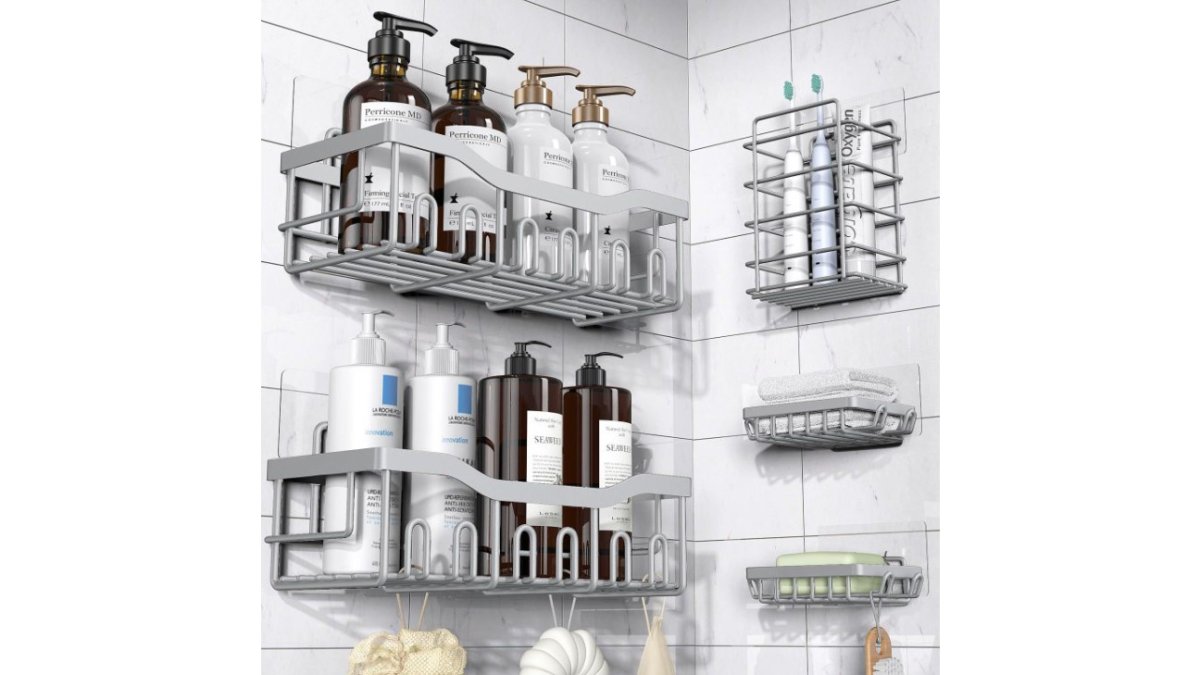
Wall-Mounted Racks That Keep Bottles Off the Floor
Wall-mounted racks lift bottles off the shower floor, where water pools and grime builds up most. You can buy the Bathroom Wall-mounted Storage Rack directly from the product page. For more on picking the right model, read how to choose the best bathroom wall storage rack for small spaces.

Mount the rack where it does not block the showerhead or your reach to the faucet. Check that the wall can take the weight of full bottles before you drill.
Drainage-Friendly Baskets and Open-Wire Designs
Baskets with open gaps let water run through instead of sitting in the bottom. Choose a basket with a removable tray or a simple shape so you can lift it out and rinse it under the tap.
Shower Caddy Alternatives That Avoid Grime Traps
Traditional shower caddies often have fabric pockets, tight corners and suction cups that trap water. If you're looking beyond them, consider these alternatives:
- Wall-mounted racks: Keep items off the floor and offer open shelves.
- Open-wire baskets: Allow water to drain and make cleaning simple.
- Tension-pole organizers: Store items without drilling, though check that the pole stays secure over time.
Rental-Friendly and No-Drill Options for Shower Storage
Renters often assume they have to live with clutter. In practice, many storage ideas work without permanent changes. Tension-pole systems fit between shower walls without drilling, and freestanding racks can be moved if you relocate. Adhesive hooks can hold lightweight items, but read the weight rating and test them carefully, since adhesive can damage painted or tiled surfaces when removed.
If you're unsure whether a product will leave marks, check your lease or ask your landlord before installing anything.
Bathroom Wall-mounted Storage Rack →
Cleaning and Maintenance Routines by Material
Cleaning depends on what your storage is made of, and a single routine will not serve every surface. The guide below pairs each common material with the cleaner that works, the tool that will not scratch it, and the failure mode to watch for.
Stainless Steel
Use a pH-neutral dish soap diluted in warm water and a soft microfiber cloth. Wipe with the grain of the brushed finish, then dry with a second cloth to prevent water spots. For hard-water film, a 50/50 mix of white vinegar and water works, but rinse it off within a minute so the acid does not dull the finish. Avoid chlorine bleach and abrasive powders, which pit the surface and open it to rust. A thin coat of mineral oil applied twice a year helps repel water on brushed steel.
Powder-Coated Iron and Steel
The coating is what protects the metal, so treat it gently. Wipe with mild soap and water, dry immediately, and inspect the edges and welds monthly for chips. A chipped spot that stays wet will rust within days. Touch up chips with a matching enamel repair pen, and keep the rack out of direct spray from the showerhead to reduce standing water on the coating.
Plastic
Smooth plastic handles mild soap and water and can usually take a stronger all-purpose cleaner, but test on a hidden area first. Avoid solvent-based cleaners and abrasive pads, which cloud the surface and create microscopic scratches that trap residue. For textured plastic, use a soft-bristle brush to work soap out of the grain. Clear plastic that has yellowed can sometimes be revived with a paste of baking soda and water, but yellowing is usually permanent.
Bamboo
Bamboo needs the most care. Wipe it dry promptly after each use, never soak it, and avoid leaving wet bottles sitting directly on the surface. Clean with a damp cloth and mild soap, then dry immediately. Once a month, apply a food-safe oil such as mineral oil or a bamboo-specific sealer to slow moisture absorption. Watch out: bamboo that stays damp develops black mold in the grain, and once mold is established in the fibers it is very difficult to remove.
Silicone
Silicone is non-porous but can develop a slimy biofilm if it stays wet. Rinse after each use, and run flexible silicone trays and baskets through the dishwasher monthly if they are dishwasher-safe. For stubborn film, soak in a 50/50 white vinegar and water solution for 30 minutes, then scrub with a soft brush. Avoid bleach on colored silicone, which can fade it.
Glass and Ceramic
Wipe with a glass cleaner or mild soap and water, and dry with a microfiber cloth to prevent streaks. Avoid abrasive pads, which scratch glazed ceramic and can etch glass over time. Check mounting hardware monthly, since heavy glass shelves put more stress on brackets than lighter materials.
A Monthly Deep-Clean Checklist
- Remove all bottles and baskets from the shower.
- Rinse every surface with warm water.
- Apply the material-appropriate cleaner listed above and let it sit for 3-5 minutes.
- Scrub joints, corners, and undersides with a soft brush.
- Rinse thoroughly and dry with a microfiber cloth.
- Inspect for chips, rust spots, mold, or loose mounting hardware and address them before reinstalling.
Scrubbing with abrasive pads can scratch finishes on any material, so keep them for tougher jobs only and test on a hidden area first.
Each material needs a different cleaner and care routine, so the table below pairs them with the key cleaning tip and the failure to watch for.
| Material | Best cleaner or care | Watch out for |
|---|---|---|
| Stainless steel | Dish soap, wipe with grain | Chlorine bleach pits surface |
| Powder-coated iron | Mild soap, dry immediately | Chips rust within days |
| Plastic | Mild soap; test cleaners first | Solvents cloud the surface |
| Bamboo | Damp cloth, oil monthly | Damp grain grows black mold |
| Silicone | Rinse; vinegar soak for film | Bleach can fade colored silicone |
| Glass and ceramic | Glass cleaner, microfiber cloth | Abrasive pads scratch the surface |
Choosing Your Next Shower Storage Setup
The right setup depends on your bathroom, your budget and how much time you want to spend cleaning. Start by identifying the biggest problem areas in your shower.
If you want a place to start, the LumBrook Bathroom Wall-mounted Storage Rack is a practical pick for small bathrooms. The LumBrook Multifunctional Draining Basket and Bowl for Kitchen ($24.74) and the LumBrook Universal 1080° Rotating Faucet Extender ($51.78) are also available in the LumBrook collection. Browse the full LumBrook collection to compare options that fit your space.
Frequently Asked Questions
What is the easiest shower surface to keep clean?
Non-porous surfaces such as glazed porcelain tile, sealed stone, and glass are the easiest to keep clean because soap scum and water spots do not soak in. Grout and textured materials trap more residue. When you choose storage, pick pieces that sit on or hang from these surfaces with minimal contact points, so you can wipe the whole shower in one pass. Rinse after each use and dry with a squeegee to slow mold growth.
What are some shower storage ideas that don't require drilling?
Tension pole storage, suction cup organizers, and adhesive-backed hooks work well in rentals. Tension poles fit inside the enclosure and hold open-wire baskets without touching tile. Suction cups suit smooth, non-textured tile and glass, but they can lose grip over time, so check them monthly. Choose adhesive products rated for wet areas and remove them carefully with a hair dryer to avoid damaging paint or tile finish.
How do you prevent mold on shower organizers?
Choose non-porous materials such as stainless steel, plastic with drainage holes, or sealed bamboo, and avoid fabric or unsealed wood. Make sure water can drain out of every basket and shelf rather than pooling in corners. Wipe the organizer weekly with a mild cleaner, rinse, and let it air dry before closing the enclosure. Good airflow through the bathroom after showers matters as much as the material you buy.
Are stainless steel shower caddies better than plastic?
Stainless steel resists rust and holds up well to frequent wet use, which makes it a strong choice for long-term durability. Plastic is lighter, usually cheaper, and does not rust, but cheaper versions can discolor or crack over time. Both can be easy to clean if they have drainage holes and smooth surfaces. The gray five-layer iron bathroom rack from LumBrook is priced at $121.93.


